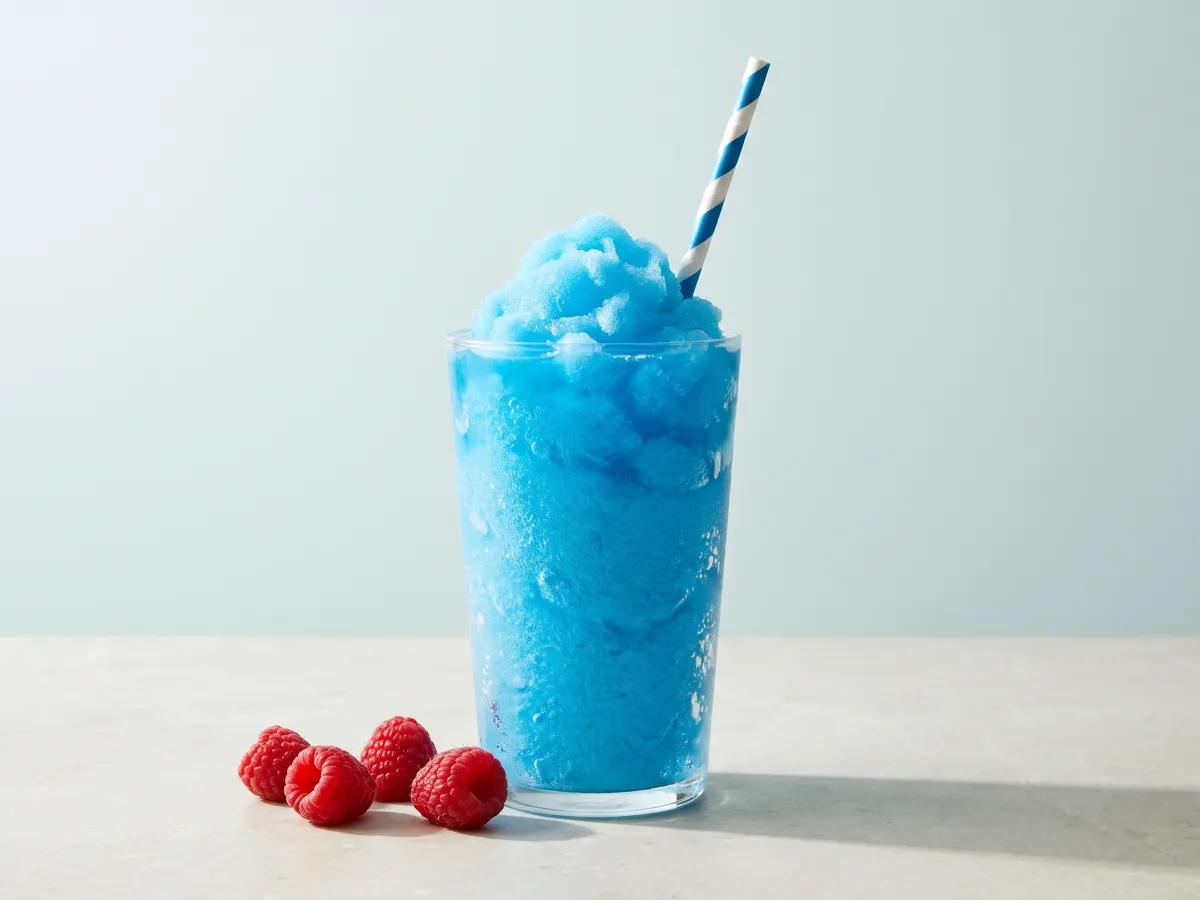
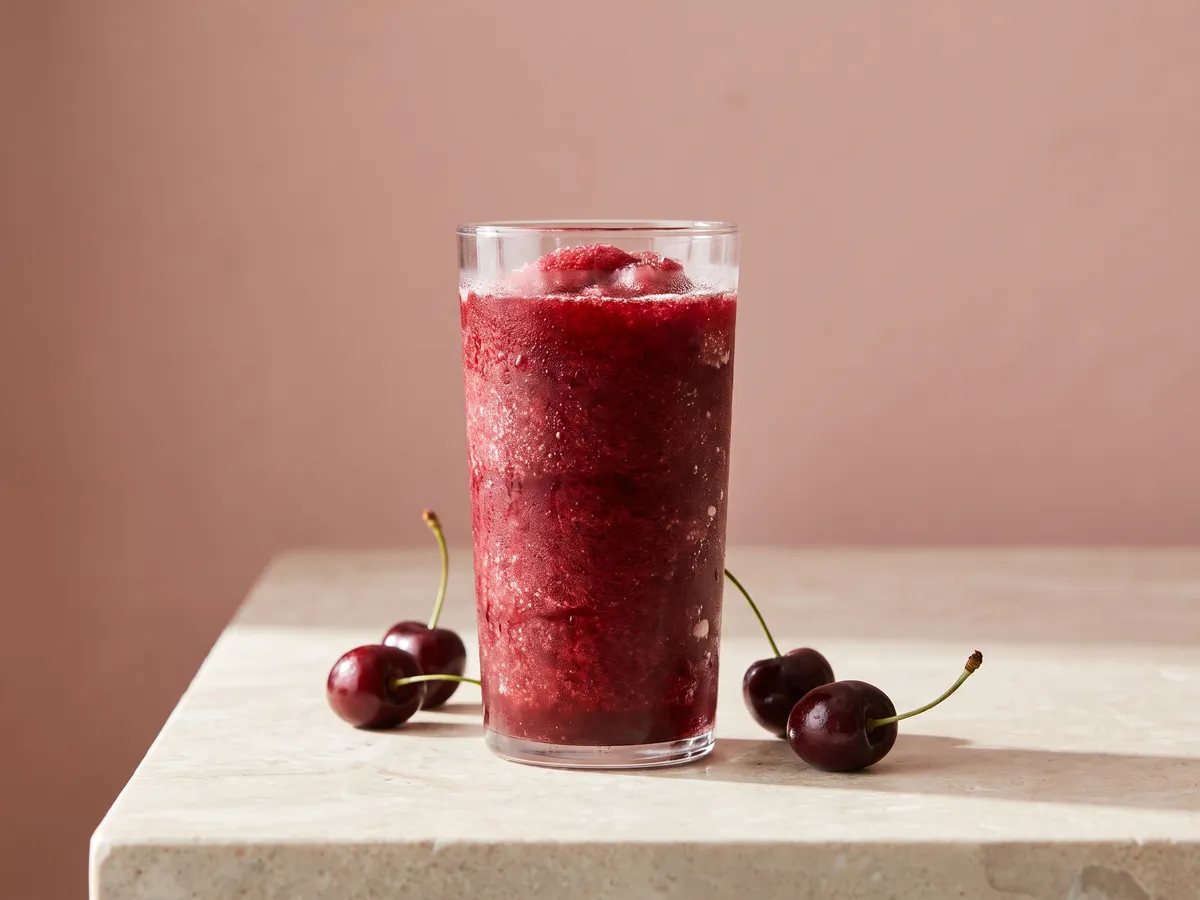
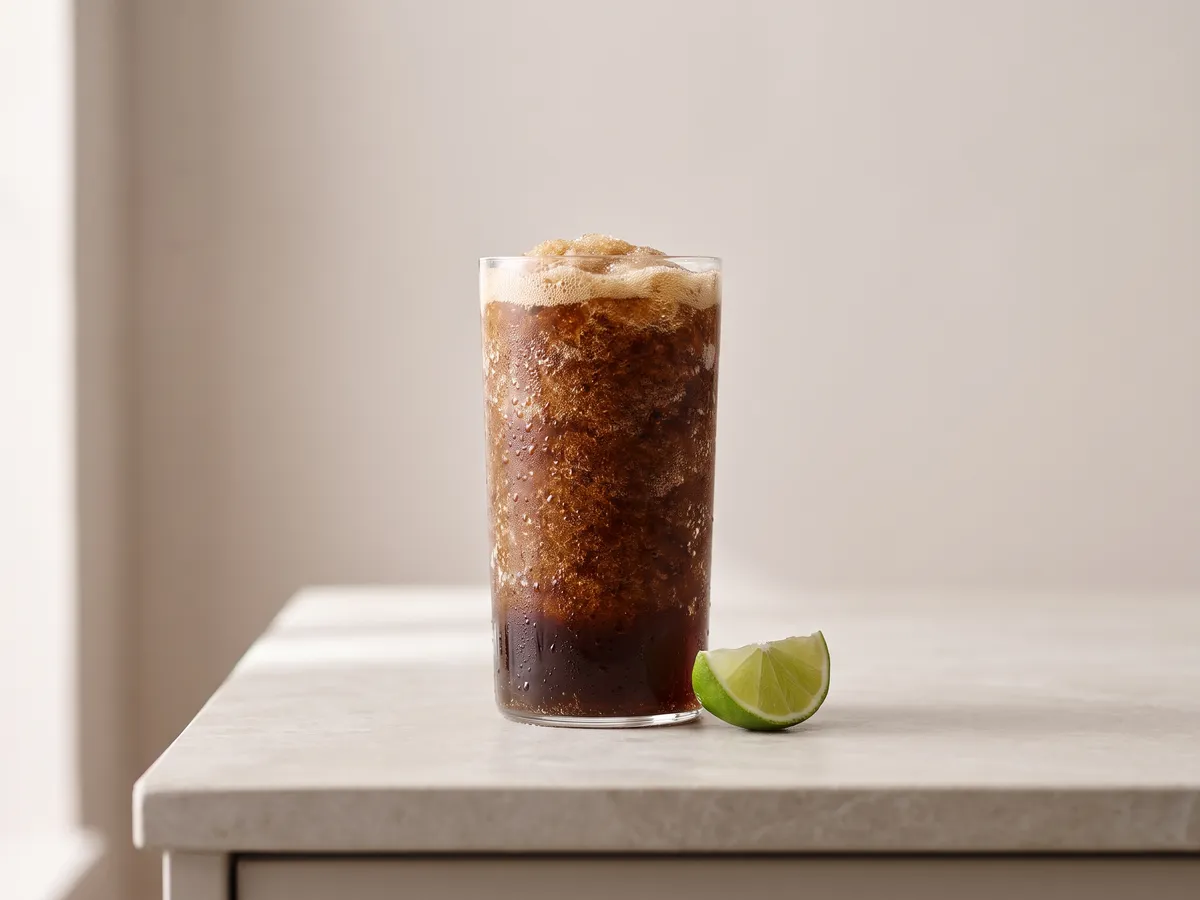
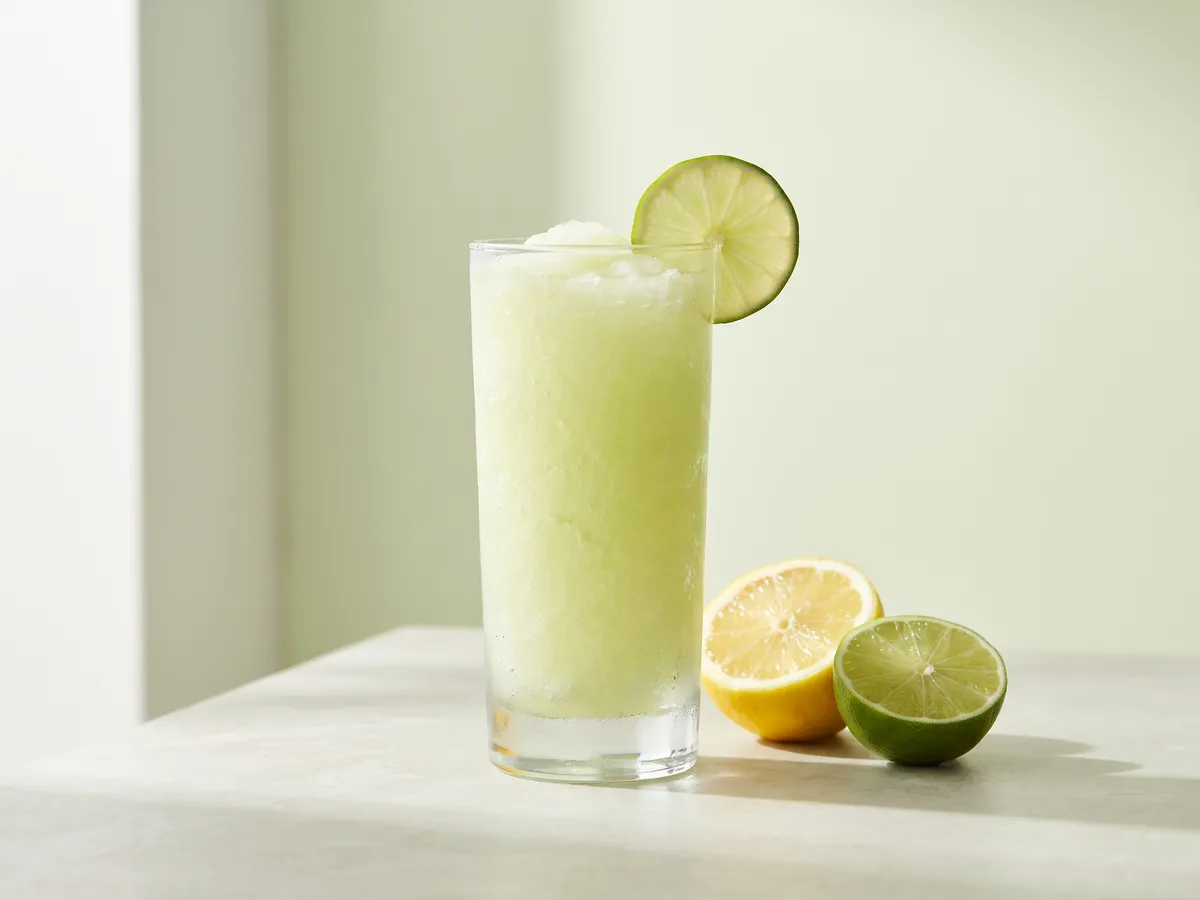
A slushie is a drink that has been frozen into a mass of very small ice crystals suspended in sweet syrup. It is thicker than an iced drink and looser than a sorbet, so you drink it through a straw or a spoon straw rather than eating it. Wikipedia defines a slushy (also spelled slushie, and less often slushee) as "a type of drink made of flavored ice and a drink," and notes it is also called a slush or frozen drink (Wikipedia, Slush).
The word is generic. Slurpee and ICEE are not: they are brand names for one specific kind of slush, the carbonated kind sold from fountain machines. That distinction explains most of the "Slurpee vs slushie" and "slushie vs ICEE" confusion.
What makes a slushie a slushie?
Three things, all working together:
- Sugar (or another dissolved solid). Dissolved sugar lowers the freezing point of water. Food scientist H. Douglas Goff explains that this effect depends on the number of dissolved molecules (Goff, University of Guelph). As ice forms, the remaining liquid gets sweeter and harder to freeze, which keeps it runny between the crystals.
- Cold. The drink has to be held below its own freezing point, usually against a refrigerated surface.
- Constant movement. Wikipedia describes how machines scrape crystals off the freezing cylinder with a rotating dasher so they stay small (Wikipedia, Slush). Without stirring, a sweet drink just freezes into a block of flavored ice.
Wikipedia gives roughly 12 to 22 percent sugar as the range a sugar and water slush needs to avoid freezing solid. Home machines set lower floors for their own designs: Ninja's US guide for the SLUSHi FS301 requires at least 4 percent sugar in every input (Ninja FS301 guide, copy).
What is the difference between carbonated and non-carbonated slush?
Slush comes in two families, and they are made by different machines.
Frozen carbonated beverages
This is the ICEE and Slurpee style. The drink, carbonated water and syrup are held under pressure in a sealed freezing cylinder, where they freeze onto the wall and are scraped off by a rotating dasher. Wikipedia notes that carbonated slushies tend to be "drier" than non-carbonated ones. The pressure equipment makes these machines more expensive and more complex to maintain, which keeps them in commercial settings.
Non-carbonated (still) slush
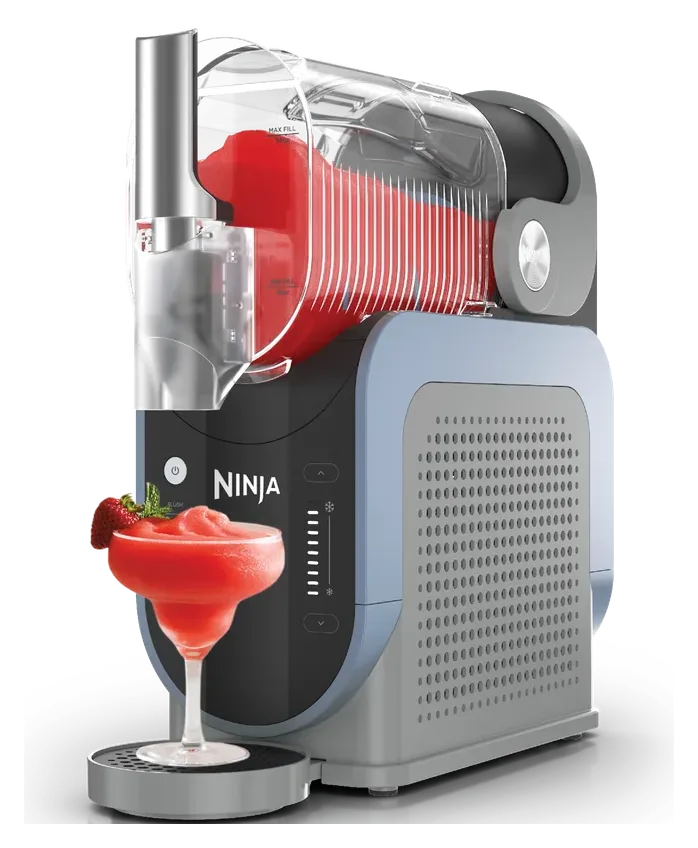
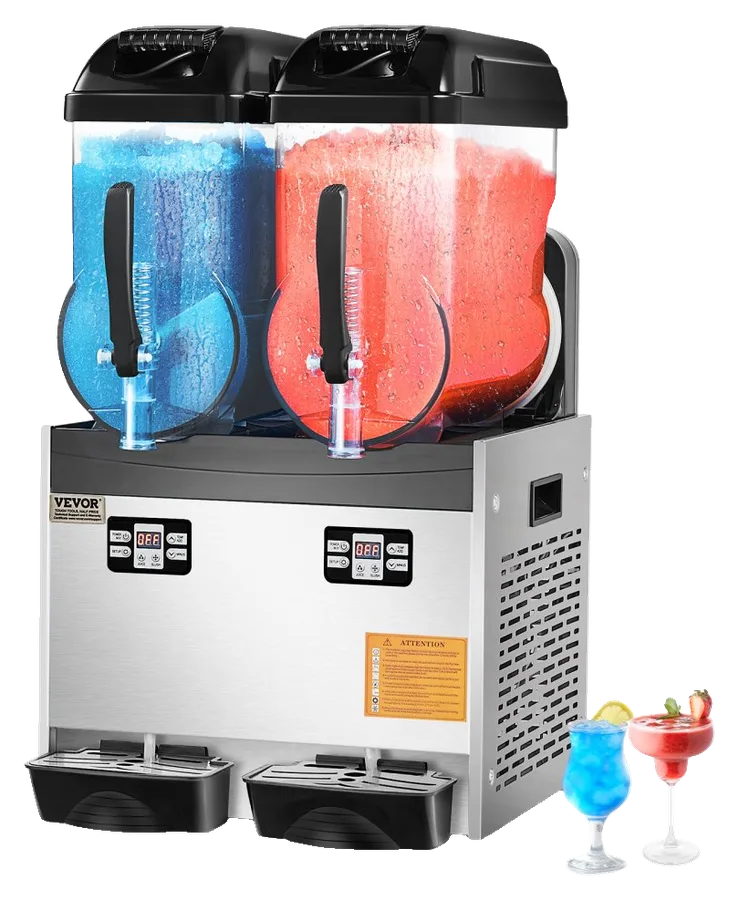
This is the granita-machine style, and it is what home compressor slushie machines make. The drink sits in an open bowl or vessel around a refrigerated cylinder, and a spiral auger turns to scrape and circulate it. No pressure chamber is needed, so the machines are cheaper and simpler. Home compressor machines such as the Ninja SLUSHi FS301 and commercial bowl units such as the VEVOR two-tank slushy machine both work this way. You can pour soda into them, but the fizz mostly escapes; the result is a soda-flavored still slush rather than a true frozen carbonated drink.
For the mechanics in more depth, see how a slushie machine works.
Who invented the slushie?
The frozen carbonated slush traces back to Omar Knedlik, a Dairy Queen owner in Coffeyville, Kansas. According to Wikipedia's article on The Icee Company, his soda fountain broke in 1958, and he started keeping bottles of soda in the freezer; customers liked the partly frozen result. Knedlik worked with the John E. Mitchell Company in Dallas to build a machine that made the effect on purpose, and received a patent for it in 1962 (filed in 1958; US patent 3,044,878). The name ICEE and the original logo came from Ruth E. Taylor, a local artist (Wikipedia, The Icee Company).
Sweetened shaved and stirred ice is much older. Sicilian granita, a sugar and water base "stirred during freezing to produce a soft mixture" of ice crystals, long predates the fountain machine (Wikipedia, Granita).
What is the difference between a Slurpee and a slushie?
A Slurpee is a slushie: specifically, 7-Eleven's brand of carbonated slush. "Slushie" is the generic word for any frozen drink of this kind, carbonated or not.
- Origin. In 1965, 7-Eleven made a licensing deal with The Icee Company and bought its machines; the product took the name Slurpee in 1966 (Wikipedia, Slurpee). NACS, the convenience store trade association, also dates 7-Eleven's licensing of the machine to 1965 (NACS).
- The name. Bob Stanford, a director at 7-Eleven's advertising agency, coined "Slurpee" after the slurping sound the drink makes through a straw (NACS; Wikipedia).
- The trademark. SLURPEE is a registered trademark of 7-Eleven, Inc. for semi-frozen carbonated beverages (USPTO registration 6113718).
- Where you get it. Only at 7-Eleven and its affiliated stores.
What is the difference between a slushie and an ICEE?
An ICEE is also a slushie, and the original frozen carbonated one. The ICEE Company calls itself "the home to the original Frozen Carbonated Beverage" and says J&J Snack Foods acquired it in 1987 (The ICEE Company). Wikipedia also lists 1988 for that acquisition, so sources differ by a year. ICEE is a brand name; the drink it names is a carbonated slush.
How do Slurpee, ICEE, slushie, granita and other frozen drinks compare?
| Drink | Generic or brand | Carbonated? | How it is made | Typical texture | Where you find it |
|---|---|---|---|---|---|
| Slushie (slush, slushy) | Generic | Either | Sweet drink frozen while stirred, in a machine, blender or freezer | Fine crystals in syrup, sippable | Anywhere; home machines make still slush |
| ICEE | Brand (The ICEE Company) | Yes | Pressurized freezing cylinder with a scraping dasher | Drier than still slush | ICEE fountain machines |
| Slurpee | Brand (7-Eleven, Inc.) | Yes | ICEE-type pressurized machine, licensed in 1965 | Drier than still slush | 7-Eleven stores |
| Granita | Generic (Sicilian dessert) | No | Sugar and water base stirred or scraped while freezing | Coarse to nearly smooth, by region | Cafes; easy at home in a freezer |
| Snow cone or shaved ice | Generic | No | Plain ice shaved or crushed, then syrup poured on top | Crunchy (snow cone) to fluffy (shaved ice) | Snow cone machines; see snow cone machines |
| Frozen margarita (machine style) | Generic | No | Ice shaved and blended with the drink, or slushed in a machine | Thick, blended | Margarita machines (for adults of legal drinking age) |
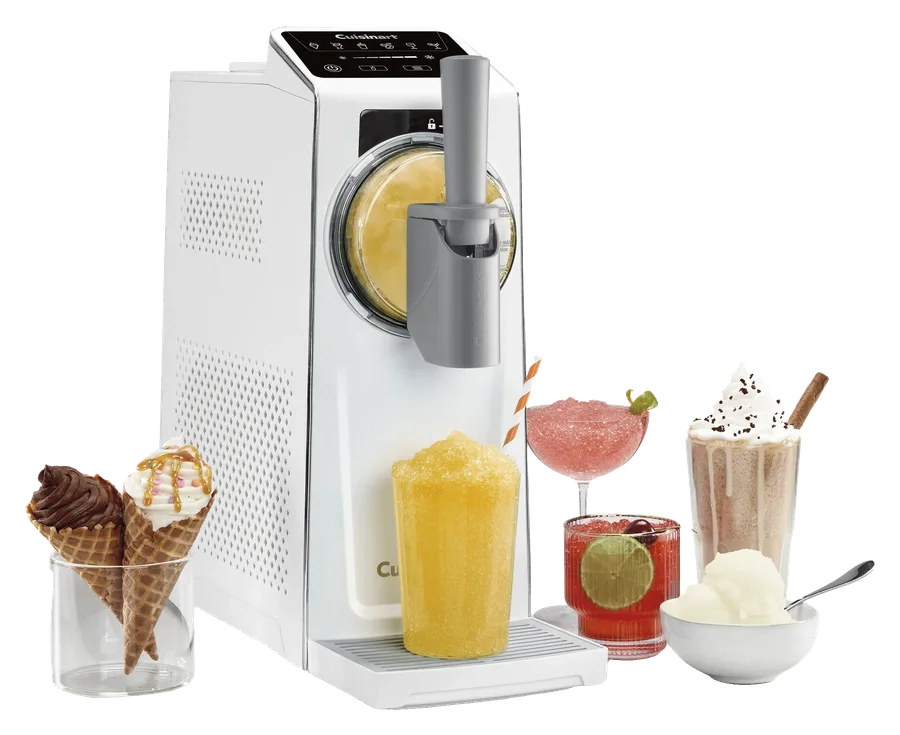
| Milkshake or frappe | Generic | No | Dairy or coffee base, blended or slushed | Creamy, thick | Blenders; some slushie machine programs |
The biggest practical difference is where the sugar goes. In a slushie the drink itself is sweetened and frozen. In a snow cone, plain ice is frozen first and the sweet snow cone syrup is added after.
Can you make ICEE-style slush at home?
Not exactly. Home machines do not pressurize the drink, so they make still slush. Soda works in them (Ninja lists soda as an example for its SLUSH program), and the result has a soda flavor with a little fizz left, but the drier texture of a fountain ICEE needs the pressurized system. For the home methods, see how to make a slushie, and for soda flavors try a cola slushie, a blue raspberry slushie or a cherry slushie. To see what each home machine offers, browse the slushie machines.
Quick answers
Is a slushie the same as a Slurpee?
A Slurpee is one brand of slushie. All Slurpees are slushies, but most slushies are not Slurpees.
Is an ICEE the same as a Slurpee?
They are the same type of drink, frozen carbonated slush, and the Slurpee began with ICEE machines licensed by 7-Eleven in 1965. They are different brands owned by different companies.
Is it spelled slushie or slushy?
Both are used. Wikipedia lists slushy, slushie and the less common slushee. "Slush" means the same thing.
Why do slushies have so much sugar?
Sugar lowers the freezing point and keeps the ice crystals small and loose. Without enough of it, the drink freezes hard.
Is a granita a slushie?
They are close relatives. A granita is a sweet ice stirred while it freezes, usually eaten with a spoon and often coarser than slush.